
To really get what gut health means, think of your digestive system as a selective gatekeeper. It picks out all the essential nutrients your body needs from your food while keeping harmful germs, poisons, and toxins out of your bloodstream. It’s fair to say that what’s happening in your gut pretty much dictates your overall physical health.
People have known the basics of digestion for centuries, but scientists are only now unlocking the hidden rules that control the whole process. Luckily, recent leaps in tech have allowed researchers to take a deep look at what’s actually living inside your intestines.
Turns out, you have over a trillion microbes living in your gut—collectively known as your gut microbiota or gut flora. Discovering how these tiny bacteria constantly talk to your cells has completely shifted modern medicine’s view on how your body works.
Recent clinical research points to major, wide-ranging health perks directly tied to your gut. Here are seven science-backed reasons why you’ll want to pay close attention to your gut health.
1. Your Gut Health Affects Nutrient Absorption
Contrary to the common-sense notion that what you eat determines what nutrients are available to your body, evidence now shows that it is your gut health that ultimately determines the amounts of vitamins, minerals and fuel that enter in your body.
Much of this shift in understanding has come from studies not looking at the intestines themselves, but at the gut microbiota. We now know that these bacteria play a fundamental role in determining which nutrients are available to the intestines and how well the available nutrients are absorbed.
Multiple studies show that a healthy gut microbiota helps prevent nutrient deficiencies by:
- Producing vitamins directly in the intestines for you to absorb, including vitamin K and the B-vitamins
- Producing fuel for the cells lining the intestines, to keep them absorbing nutrients at full capacity
- Communicating with the cells lining the intestines when and when not to grow and divide, and to keep the lining of the wall at the right thickness for optimal nutrient absorption
Studies also show that gut bacteria are able to break down normally non-digestible components of food into molecules that the body can use for fuel. Fascinatingly, some species of gut bacteria are better at converting non-digestible food to fuel than others. This means, depending on the species of bacteria living in your intestines, you extract a different number of calories from the food you eat.
Studies indicate that, for the same exact meal, individuals with an unhealthy gut microbiota, absorb hundreds of calories more than people with a healthy one. Such studies indicate that having healthy gut flora can help you maintain a healthy energy balance and avoiding weight gain.
2. A Healthy Gut Prevents Constipation
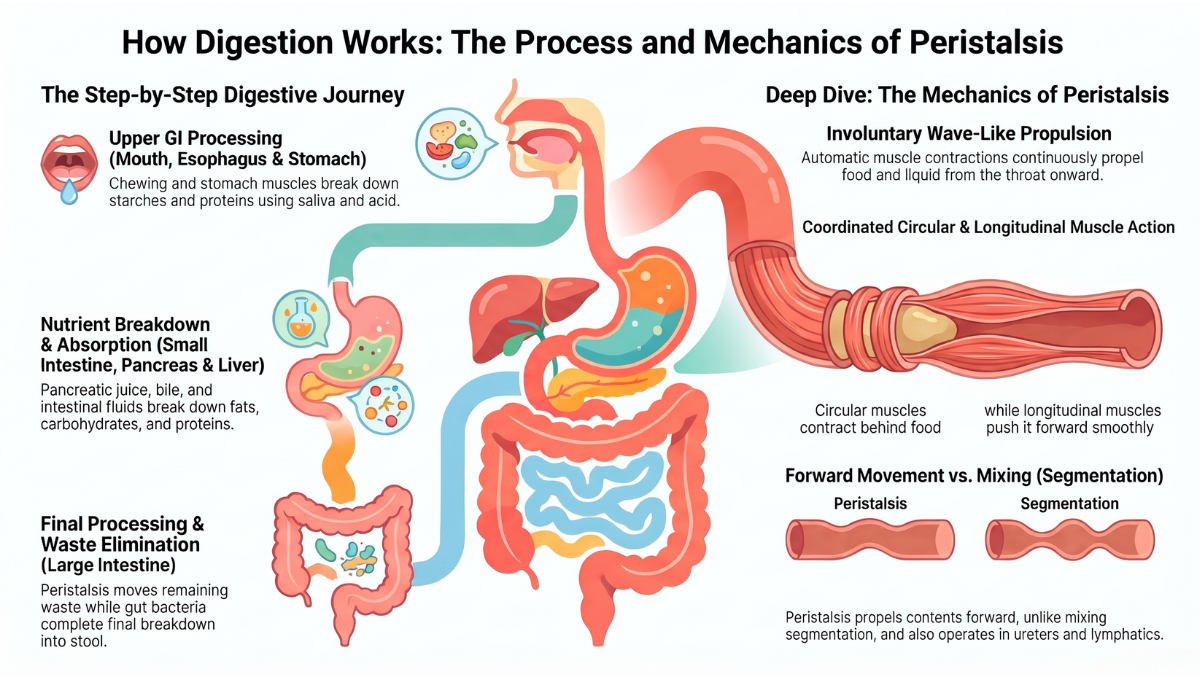
Having a healthy gut can promote regular bowel movements. Strong, healthy muscles in the walls of the intestines are able to contract more efficiently, pushing food through the intestines more quickly. A healthy gut microbiota has also been shown to help coordinate the contractions of the intestinal walls, helping move food through the gut at a healthy rate.
Regular bowel movements are vital to protecting your overall health. Not only do they prevent the pain and bloating associated with constipation, they dramatically reduce your risk of developing two serious conditions: hernias and cancer.
- Hernias. Straining to pass the hard, dry stools caused by irregular bowel movements puts you at serious risk for developing a hernia. A hernia occurs when an intestine or other organ pushes through the wall of your abdomen or diaphragm. This is not only debilitatingly painful, but may also become life-threatening.
- Cancer. Though occasional constipation likely has little effect, having irregular bowel movements for extended periods of time puts you at greater risk for certain types of cancer. This is because bowel movements are responsible for removing toxins and digestive fluids from your body, which can promote cancer.
Perhaps the most important cancer causing molecules that build up in your intestines if you are constipated are bile acids. While you are supposed to have moderate amounts of bile acids in your intestines to help digest and absorb fat, high concentrations can damage your DNA, promoting cancer. Many studies show that when bile acids build up in the digestive tract, they can promote throat, stomach or intestinal cancer.
Additionally, if bile acids aren’t removed from the gut quickly enough, through regular bowel movements, they can be absorbed by the intestines and build up in the bloodstream as well. From there, they can promote cancer anywhere in the body, such as in the breasts or the pancreas.
3. A Healthy Gut Protects You from Infections
It may not surprise you to learn that a healthy gut protects your digestive tract from infections. Healthy intestines and gut microbiota perform complementary functions that prevent dangerous bacteria from getting into the wall of the intestines. A healthy top layer of intestinal cells creates a physical barrier, keeping the dangerous bacteria out of the walls of the intestines. When the gut microbiota is healthy, it naturally kills off dangerous bacteria in the area by:
- Consuming nutrients that dangerous bacteria need to survive
- Producing natural acids to make the content of the intestines too acidic for infectious bacteria to survive
- Stimulating intestinal cells to produce natural antibiotics
Since the gut microbiota never comes into contact with bacteria living anywhere but the intestines, scientists were surprised to discover that a healthy gut microbiota also helps kill off infections in the rest of the body. We now know that this effect is mediated by the ability of healthy gut microbes to boost the function of the entire immune system. Multiple studies have shown that a healthy gut microbiota increases the total number of white blood cells available to surveil your body for intruders.
Moreover, recent studies show that healthy gut bacteria also increase the ability of immune cells to kill their targets. A greater number of deadlier white blood cells provides a serious boost in immune function! In fact, evidence suggests that a healthy gut microbiota can increase your ability to fight off everything from a simple sinus infection or yeast infection to a life-threatening infection, like pneumonia.
A healthy gut microbiota may even boost your immune system enough to make vaccinations from your doctor more effective. Vaccines work by introducing a part of a dangerous bacteria or virus to your immune system so that it can recognize the whole bacteria or virus if it comes across it later.
A healthy microbiome boosts the ability of white blood cells to find and memorize these pieces, improving how well the vaccine can protect you. This has been proven for specific vaccines, such as the flu vaccine, but future studies may show that this effect is common for most vaccines.
4. A Healthy Gut Prevents Systemic Inflammation
Systemic inflammation describes a state where the immune system produces the chemicals it uses to fight an infection, even though there is none. This can occur for many reasons, but one of the most common is having molecules in your blood that are usually there when you do have an infection, such as lots of cholesterol or sugar. If your immune cells see these molecules in your blood, but cannot find an actual infection, they become confused and start just releasing infection-fighting chemicals into your bloodstream.
Unfortunately, these chemicals can also damage your healthy cells if released in this unregulated way. Over long periods of time, damage to your healthy cells from these chemicals can lead to many of our most common chronic diseases, including:
There is convincing evidence that a healthy gut keeps immune cells from producing these chemicals when they are not needed. Good gut bacteria produce specific kinds of sugar complexes that can enter the intestinal wall and activate a group of white blood cells called Treg cells. Activated Treg cells send calming signals to the rest of the immune system, turning off the white blood cells producing the damaging chemicals.
5. A Healthy Gut Prevents Autoimmune Diseases
An autoimmune disease is a condition where your immune system recognizes a normal molecule in your body as dangerous and begins attacking and killing any cell that contains it. Scientists believe many autoimmune diseases develop when the immune system encounters a foreign molecule that happens to be very similar to one naturally found in your body. When the immune system begins destroying the bacteria or virus that brought the foreign molecule into your body, your healthy cells get caught in the cross-fire.
It has been established that a healthy gut protects you from developing many autoimmune diseases, including:
- Crohn’s disease
- Ulcerative Colitis
- Rheumatoid arthritis
- Type 1 diabetes
- Multiple sclerosis
Scientists believe that this is because a healthy gut minimizes the amount of foreign molecules the intestinal immune cells come into contact with. The fewer foreign bodies the immune system sees, the less likely it is that one of them will happen to look like a structure in your body.
If you already have an autoimmune disease, a healthy gut may be helpful for you. Evidence suggests that a healthy gut, specifically a healthy gut microbiota, can alleviate the symptoms of an autoimmune disease. This is due to the ability of healthy gut microbes to activate the Treg cells mentioned above. Treg cells can turn off immune cells that are attacking your own cells, helping slow down the damage to your tissues and organs.
6. A Healthy Gut Prevents Heart Disease
Now, let’s talk about how your gut health plays a crucial role in keeping your heart healthy.
Studies indicate that a healthy gut can influence four of the most important risk factors for developing heart disease: high cholesterol, chronic inflammation, high blood pressure and unhealthy trimethylamine (TMA) concentrations.
- High cholesterol. Elevated levels of cholesterol in the blood are the number one risk factor for developing cardiovascular disease. A healthy gut does not absorb as much cholesterol out of the diet, lowering blood cholesterol levels, researchers reveal.
- Chronic inflammation. Evidence clearly shows that chronic inflammation promotes cardiovascular disease. As mentioned above, a healthy gut helps prevent chronic inflammation.
- High blood pressure. A healthy gut can help lower your blood pressure. Scientists think this is due, at least in part, to effects of so-called short-chain fatty acids (SCFAs). These small molecules are made as byproducts when healthy gut bacteria break down fiber for their own energy needs. SCFAs have been shown to be able to increase the diameter of blood vessels (which decreases blood pressure by easing the flow of blood) and alter the hormonal function of the kidneys (which are the primary organs responsible for regulating blood pressure).
- TMA concentrations. Trimethylamine (TMA) is a product formed by some harmful gut bacteria when they break down choline, a natural nutrient found in many plant and animal foods. TMA can be absorbed through the intestines and enter the bloodstream. Unfortunately, TMA directly damages the walls of your heart arteries, making you more susceptible to developing heart disease. A healthy gut microbiota contains no harmful bacteria that produce TMA.
Together, these effects of a healthy gut may have the power to drastically reduce your risk of developing heart disease.
7. A Healthy Gut Protects Your Brain
The final, and perhaps most unexpected, benefit of a healthy gut is a healthy brain. There is now overwhelming evidence that a healthy gut protects against many mental conditions, including:
- Depression
- Anxiety
- Autism
Scientists still know little about the mechanisms coupling gut health to mental health. One of the most promising theories is that SCFAs, made by healthy gut microbes, are able to send signals to the brain improving your mood and honing cognition. We know that some SCFAs are able to directly activate the parasympathetic nervous system.
This is a branch of the autonomic nervous system, which controls body functions we are unaware of – breathing, heart rate, body temperature. Changes in parasympathetic signals to the brain can change hormone levels in the brain to regulate functions like appetite. Further research is being conducted to determine if a similar mechanism may be able to regulate mood and cognition as well.
Final Thoughts
Recent scientific studies into the nature of the gut and the gut microbiota have revolutionized our understanding of how they work, and how they interact with the rest of the human body. We now know that having a healthy gut benefits nearly every aspect of your health. Having good gut health can help protect you from everything from nutrient deficiencies and constipation to obesity, diabetes, autoimmune diseases, infections, heart disease, depression, anxiety and cancer.
References
- National Institutes of Health. “The digestive system & how it works.” (2013). https://www.niddk.nih.gov/health-information/digestive-diseases/digestive-system-how-it-works.
- Ramakrishna, Balakrishnan S. “Role of the gut microbiota in human nutrition and metabolism.” Journal of Gastroenterology and Hepatology 28.Supp 4 (2013): 9-17. From: https://s3.amazonaws.com/academia.edu.documents/46001841/Role_of_the_gut_microbiota_in_human_nutr20160527-15598-1bolsyp.pdf?AWSAccessKeyId=AKIAIWOWYYGZ2Y53UL3A&Expires=1507990410&Signature=818DjNshIr4DmF6hstHwv0fM%2FRI%3D&response-content-disposition=inline%3B%20filename%3DRole_of_the_gut_microbiota_in_human_nutr.pdf
- LeBlanc, Jean Guy. “Bacteria as vitamin suppliers to their host: a gut microbiota perspective.” Current Opinions in Biotechnology 24.2 (2013): 160-168. From: https://www.researchgate.net/publication/230782474_Bacteria_as_vitamin_suppliers_to_their_host_A_gut_microbiota_perspective.
- Zhang, Yu-Jie et al. “Impacts of gut bacteria on human health and diseases.” International Journal of Molecular Science 16.4 (2015): 7493-7519. From: https://www.ncbi.nlm.nih.gov/pmc/articles/PMC4425030/.
- Sommer, Felix, and Fredrik Bäckhed. “The gut microbiota — masters of host development and physiology.” Nature Reviews Microbiology 11 (2013): 227-238. From: https://www.researchgate.net/profile/Felix_Sommer/publication/235716797_The_gut_microbiota-Masters_of_host_development_and_physiology/links/5500326f0cf204d683b33ccd.pdf.
- Krajmalnik-Brown, Rosa et al. “Effects of gut microbes on nutrient absorption and energy regulation.” Nutrition in Clinical Practice 27.2 (2012): 201-214. From: https://www.ncbi.nlm.nih.gov/pmc/articles/PMC3601187/#R2.
- Jumpertz, Reiner et al. “Energy-balance studies reveal associations between gut microbes, caloric load, and nutrient absorption in humans.” The American Journal of Clinical Nutrition 94.1 (2011): 58-65. From: https://www.ncbi.nlm.nih.gov/pmc/articles/PMC3127503/.
- National Institutes of Health. “Definition and facts for constipation.” (2014). https://www.niddk.nih.gov/health-information/digestive-diseases/constipation/definition-facts.
- Kartal, A. et al. “The effect of chronic constipation on the development of inguinal herniation.” Hernia 21.4 (2017): 531-535. From: https://link.springer.com/article/10.1007/s10029-017-1604-0.
- U.S. National Library of Medicine: Medline Plus. “Hernia.” (2016). https://medlineplus.gov/ency/article/000960.htm.
- Micozzi, M.S. et al. “Bowel function and breast cancer in US women.” American Journal of Public Health 79.1 (1989): 73-75. From: https://www.ncbi.nlm.nih.gov/pmc/articles/PMC1349475/.
- Gratz, Silvia W., John R. Wallace and Hani S. El-Nezami. “Recent perspectives on the relations between fecal mutagenicity, genotoxicity and diet.” Frontiers in Pharmacology 2.4 (2011). From: https://www.ncbi.nlm.nih.gov/pmc/articles/PMC3132665/.
- Bernstein, H. et al. “Bile acids as carcinogens in human gastrointestinal cancers.” Mutation Research/Reviews in Mutation Research 589.1 (2005): 47-65. From: https://www.ncbi.nlm.nih.gov/pmc/articles/PMC3132665/.
- Costarelli, V., and T. A. B. Sanders. “Plasma deoxycholic acid concentration is elevated in postmenopausal women with newly diagnosed breast cancer.” European Journal of Clinical Nutrition 56.9 (2002): 925-927. From: http://www.nature.com/ejcn/journal/v56/n9/full/1601396a.html?foxtrotcallback=true.
- Husebye, E., P. M. Hellström and T. Medtvidt. “Intestinal microflora stimulates myoelectric activity of rat small intestine by promoting cyclic initiation and aboral propagation of migrating myoelectric complex.” Digestive Diseases and Sciences 39.5 (1994): 946-956. From: https://www.ncbi.nlm.nih.gov/pubmed/8174436.
- Hooper, Lora V., Dan R. Littman and Andrew J. Macpherson. “Interactions between the microbiota and the immune system.” Science 336.6086 (2012): 1268-1273. From: https://www.ncbi.nlm.nih.gov/pmc/articles/PMC4420145/.
- Kamada, Nobuhiko, et al. “Control of pathogens and pathobionts by the gut microbiota.” Nature Immunology 14.7 (2013): 685-690. From.: https://www.ncbi.nlm.nih.gov/pmc/articles/PMC4083503/.
- Ohkubo, T. et al. “Peripheral blood neutrophils of germ-free rats modified by in vivo granulocyte-colony-stimulating factor and exposure to natural environment.” Scandinavian Journal of Immunology 49.1 (1999): 73-77. From: http://onlinelibrary.wiley.com/doi/10.1046/j.1365-3083.1999.00456.x/full.
- Clarke, Thomas B., et al. “Recognition of peptidoglycan from the microbiota by Nod1 enhances systemic innate immunity.” Nature Medicine 16.2 (2010): 228-231. From: https://www.ncbi.nlm.nih.gov/pmc/articles/PMC4497535/.
- Phillips, A.W., and Edward Balish. “Growth and invasiveness of Candida albicans in the germ-free and conventional mouse after oral challenge.” Applied Microbiology 14.5 (1966): 737-741. From: https://www.ncbi.nlm.nih.gov/pmc/articles/PMC1058406/.
- Fagundes, Caio T., et al. “Transient TLR activation restores inflammatory response and ability to control pulmonary bacterial infection in germfree mice.” The Journal of Immunology 188.3 (2012): 1411-1420. From: http://www.jimmunol.org/content/188/3/1411.long.
- Oh, Jason Z. et al. “TLR5-mediated sensing of gut microbiota is necessary for antibody responses to sesonal influenza vaccination.” Immunity 41.3 (2014): 478-492. From: http://www.cell.com/immunity/fulltext/S1074-7613(14)00303-3?_returnURL=http%3A%2F%2Flinkinghub.elsevier.com%2Fretrieve%2Fpii%2FS1074761314003033%3Fshowall%3Dtrue
- Wannemacher, Robert W. and William R. Beisel. “Metabolic Responses of the Host to Infectious Disease.” (1976) PDF available from: http://www.dtic.mil/docs/citations/ADA032668.
- Tedgui, Alain, and Ziad Mallat. “Cytokines in atherosclerosis: pathogenic and regulatory pathways.” American Physiological Society Physiological Reviews 86.2 (2006): 515-581. From: http://physrev.physiology.org/content/86/2/515.
- Shanmugan, Narkunaraja, et al. “High glucose-induced expression of proinflammatory cytokine and chemokine genes in monocytic cells.” Diabetes 52.5 (2003): 1256-1264. From: http://diabetes.diabetesjournals.org/content/52/5/1256.
- Pawelec, Graham, David Goldeck, and Evelyna Derhovanessian. “‘Inflammation, ageing and chronic disease.” Current Opinion in Immunology 29 (2014): 23-28. From: http://www.sciencedirect.com/science/article/pii/S0952791514000557.
- Depino, Amaicha Mara. “Peripheral and central inflammation in autism spectrum disorders.” Molecular and Cellular Neuroscience 53 (2013): 69-76. From: http://www.sciencedirect.com/science/article/pii/S1044743112001856.
- Wu, Hsin-Jung, and Eric Wu. “The role of gut microbiota in immune homeostasis and autoimmunity.” Gut Microbes 3.1 (2012): 4-14. From: http://www.tandfonline.com/doi/full/10.4161/gmic.19320.
- Albert, Lori J., and Robert D. Inman. “Molecular mimicry and autoimmunity.” The New England Journal of Medicine 341 (1999): 2068-2074. From: http://www.nejm.org/doi/full/10.1056/NEJM199912303412707.
- National Institutes of Health: National Heart, Lung and Blood Institute. “Diagnosis of high blood pressure.” (2015). https://www.nhlbi.nih.gov/health/health-topics/topics/hbp/diagnosis.
- Pevsner-Fischer, Meirav et al. “The gut microbiome and hypertension.” Current Opinion in Nephrology and Hypertension 26.1 (2017): 1-8. From: https://www.researchgate.net/publication/309563837_The_gut_microbiome_and_hypertension.
- Dinon, Timothy G., and John F. Cryan. “Gut-brain axis in 2016: brain-gut-microbiota-axis – mood, metabolism and behavior.” Nature Reviews Gastroenterology and Hepatology 14 (2017): 69-70. From: https://www.nature.com/nrgastro/journal/v14/n2/full/nrgastro.2016.200.html.
Leave a Reply