Engaging in cultural tourism in Cambodia begins with a long road trip across the border from Ho Chi Minh City. I took the bus through flat agricultural terrain, watching low clouds hang over damp roadside ditches. The diesel fumes mixed with the smell of wet earth, carrying a heavy moisture that settled against the glass.
Arriving in Phnom Penh in late November meant entering a region at the edge of seasonal change. The monsoon rains had just ceased, leaving saturated paddies gleaming under grey skies. The damp heat brought back childhood memories in Calbayog City, where coastal rainstorms left stagnant water sitting long after the typhoons had passed.
Official reports classify tourism revenue in Cambodia as green gold because it generated roughly 9.4% of the gross domestic product in 2024. However, economic figures fail to reflect the textures of daily life. You must look beyond commercial statistics to understand the true character of this place.
1. The “Killing Fields” Are a Living Memory
Tuol Sleng is a hybrid space, a school that became a prison and then a museum. In the classrooms of the former Ponhea Yat high school, the air smells of old concrete and faintly, of damp earth.
Thousands of black-and-white identification photos stare from the walls, terrified faces captured in the last moment of their lives. The physical traces of violence are evident: bloodstains on the tiled floors of Building A, rusted metal bed frames, and shackles that once bound the “enemies” of the state.
Standing in those rooms leaves you dumbstruck.
Between 1975 and 1979, the Khmer Rouge regime killed up to 2 million people in execution sites across the countryside. Today, across nine provinces, survivors and their former perpetrators live side by side.
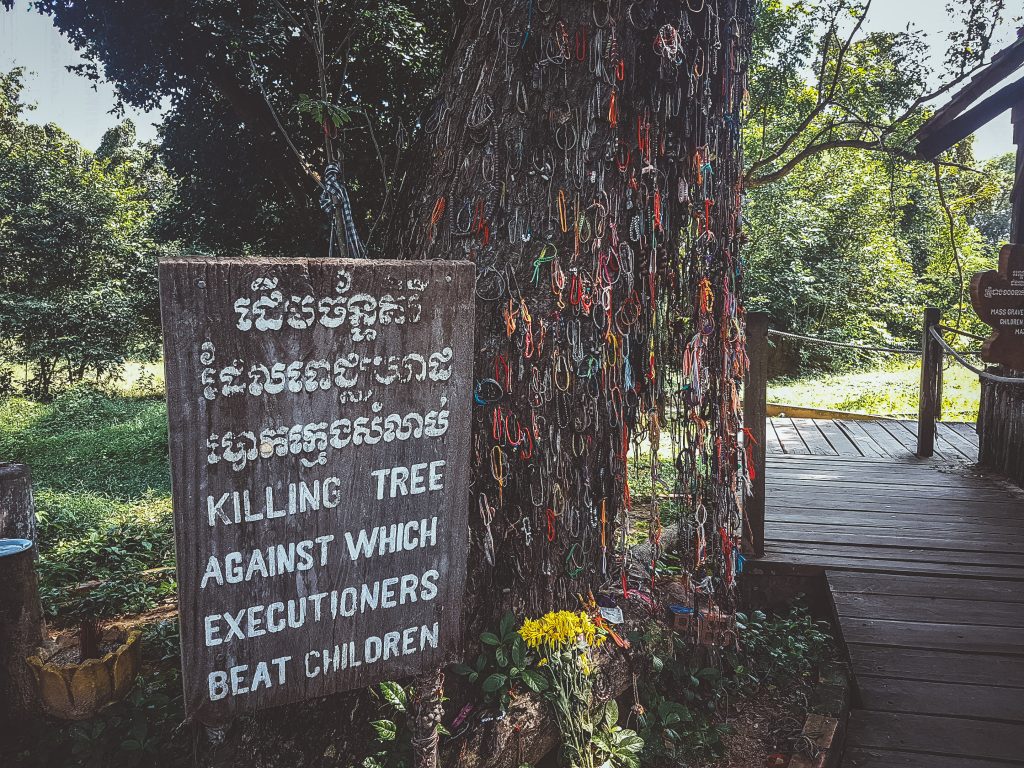
Outside the city, Choeung Ek sits in a plot of land where grass grows in the depressions of former mass grave pits. You can hear the birds chirp in the distance.
Here, a seventeen-story concrete stupa houses nearly nine thousand skulls, categorized by age and sex. You can see them staring through empty eye sockets behind glass panels. Outside, on the killing tree, thousands of hand-woven bracelets left by tourists sway in the breeze.
At a table near the exit, an elderly survivor tries to sell his memoirs to passing tourists. You cannot reduce them to simple travel stops or historical bagatelles. The dignity of these elders shows how personal memory remains woven into daily routine.
2. The Monsoon Is the Most Magical Time to See the Temples
Cultural tourism in Cambodia, in my opinion, is better during the wet season, from May to October, when the city exhales. The parched, terracotta-hued dust that blankets the roadside sugar palms and settles in your hair is washed away. The countryside turns a deep, emerald green.
During these months, tourist crowds vanish and accommodation prices drop by up to 40%.
At Angkor Wat, the rainy season creates a softness in the light that dry season glare lacks. Although heavy rains taper off by December, the countryside retains a halcyon freshness before the heat returns. The lotus ponds fill with pink flowers that appear overnight. You can walk the ramparts of Angkor Thom and see the reservoirs holding water as they have for a millennium.
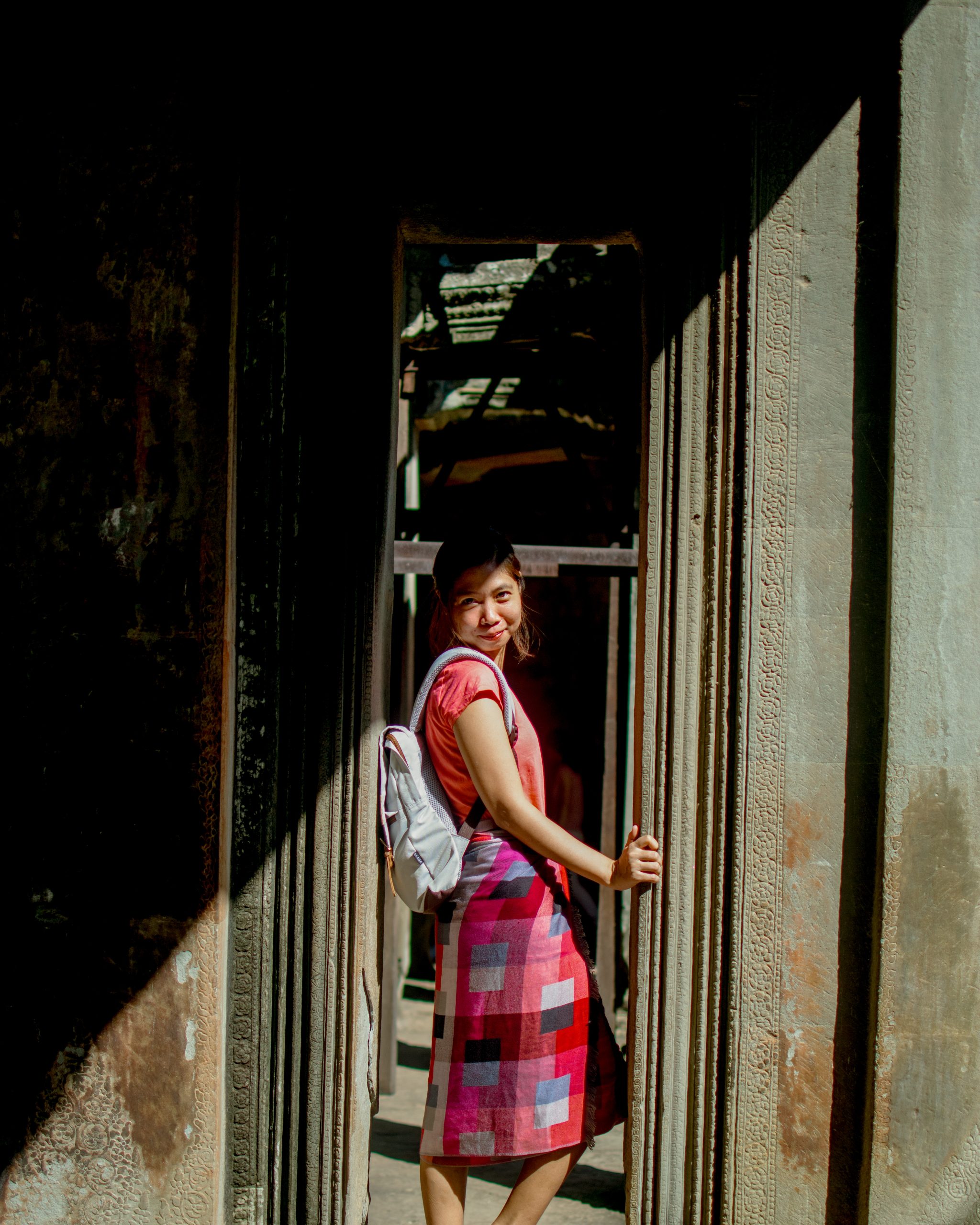
Instead of gathering with evening crowds at Phnom Bakheng, climb the hill in the quiet hours of early morning. From the summit, you look across to the calm waters of the West Baray reservoir. The wide expanse reflects the grey morning sky, offering stillness before tour buses arrive.
3. How to Navigate the “Grey Zone” of Host-Children
Outside famous temple gates, young children often approach visitors to sell small souvenirs, woven bracelets, or postcard packages.This is the grey zone of cultural tourism in Cambodia. Universalist views call for an end to all child labor to protect them from exploitation. But many Cambodian children view their work through the lens of Theravada Buddhist benevolence. Supporting one’s parents is considered a cardinal virtue.
Survey data indicates that Cambodia records the highest rate of economically active children across Southeast Asia.
While many young people work to earn fees for private English lessons, street labour exposes them to physical hazards. Furthermore, spending long hours selling goods keeps children away from structured primary education. Travellers often feel caught between immediate sympathy and the knowledge of long-term social harms.
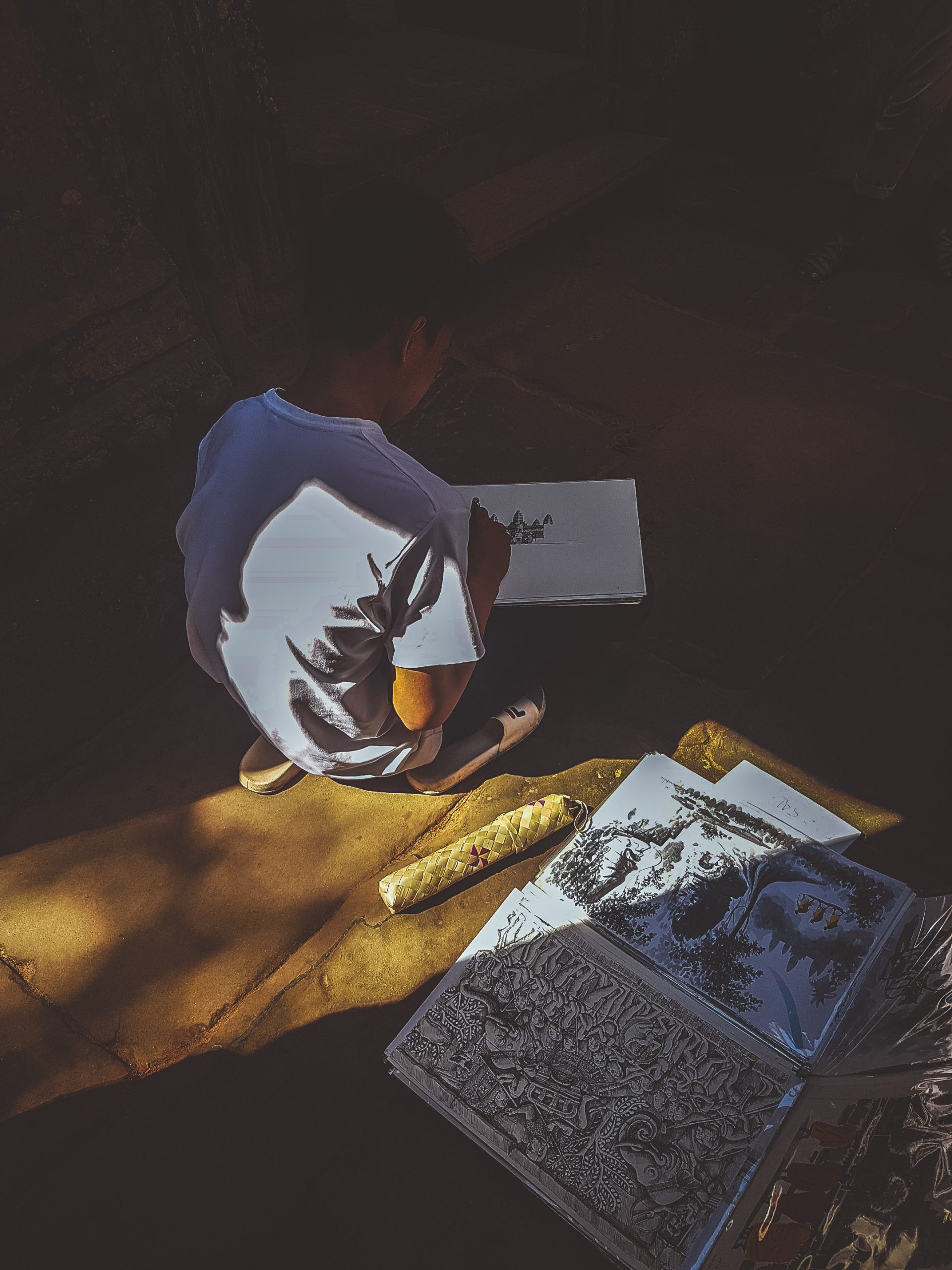
Young vendors navigating the temple grounds remind me of children outside historic churches in the Philippines selling sampaguita garlands. It’s painful to realize they have to choose between immediate survival and long-term opportunity.
Official codes of conduct urge tourists to refrain from giving money or buying items from working minors. Buying souvenirs directly from children encourages families to keep them out of school for short-term income. Thus, directing financial support toward established social enterprises provides a far more constructive alternative.
NGOs offer professional vocational training and fair jobs to over 1,000 young adults from rural areas. These organisations teach traditional stone carving, wood shaping, and silk painting while offering healthcare. Supporting these structured projects creates real paths toward economic stability without harming child welfare.
4. Your Plastic Footprint Is Heavier Than You Think
The environmental cost of development is scattered across the Cambodian landscape. In Phnom Penh, the Steung Mean Chey canal is the sink for mismanaged waste. Rafts of plastic bottles and polystyrene fragments are trapped by aquatic vegetation.
A nationwide environmental assessment covering 243 coastal and river sites revealed an average of 70 plastic items per metre of coastline. Single-use drinking water bottles are the most abundant whole item recorded on coastlines and in waterways.
On the islands of the Koh Rong archipelago, the contrast is stark. While some eco-resorts maintain litter-free beaches, sea currents drift marine debris from the mainland cities onto remote shorelines. The density of litter along Cambodia’s coastlines is more than twenty times that of inland areas, with thin-film bags and food wrappers choking the mangroves.
Sadly, cultural tourism in Cambodia contributes to a load that averages seventy plastic items per meter of coastline. I urge you to carry a stainless-steel bottle and fill it at designated water stations to help reduce waste.
5. The Creative Soul of the Country Is Being Reborn
The cultural story of Cambodia did not end with the fall of Angkor; it is being reconstructed by a new generation. Artisans Angkor, a social enterprise established in the late 1990s, revives traditional silk weaving, silverwork, and wood carving.
In Siem Reap, the creative scene is gathering momentum beyond the chaos of Pub Street. Internationally recognised artists Svay Sareth and Yim Maline established SM Art Centre after surviving the turbulent decades of Cambodia’s mid-century conflict. Their personal histories, shaped by displacement and war, guide the physical and intellectual purpose of the building.
The founders designed the venue as an open space where local creators express their ideas without restraint. In these rooms, modern artwork blends with traditional Khmer heritage. Through direct guidance, the venue gives younger artists the strength to build enduring bridges between Cambodia and the wider world.
Sitting on the open balcony of Calao, sipping a drink mixed with wild forest honey, you can feel how Cambodian culture expand far beyond ancient temple sites.
6. Slow Travel Can Support Community Governance
To travel slow is to engage with the structures that protect the environment. Choosing community initiatives elevates cultural tourism in Cambodia into a tool for rural conservation. About 70 kilometres north of Siem Reap, you’ll find the Changkran Roy recreation forest, where thick canopy covers rolling terrain. In this protected area, local villagers manage hiking paths, bamboo shelters, and small guest huts.
Community-based ecotourism projects like this allow local committees to combine environmental protection with economic independence. Income from guest accommodations directly funds village road maintenance, clean water wells, and primary school books. Thus, your spent money stays within the village rather than leaking to external tour operators.
Choosing to travel slowly lets you move past superficial sightseeing and connect with daily village life. Exploring remote areas requires extra patience, yet it reveals quiet places that are not come-at-able on quick day trips. You leave with a deeper understanding of how local governance protects natural surroundings for future generations.
Final Thoughts
This country is a historiographical kaleidoscope. It is a country defined by its resilience, surviving the intentional destruction of a generation of intellectuals. And cultural tourism in Cambodia reveals to the observer a new fragment of its story.
As I travel back to Vietnam, I mulled over the words of Preah Maha Ghosananda: “A peaceful heart makes a peaceful person… A peaceful community makes a peaceful nation.”
Travelling across this region requires patience and respect. You realise that thoughtful travel is about understanding a country’s culture rather than collecting Instagrammable photos. When your bus leaves the capital or your journey moves forward, you carry home lasting impressions.

Leave a Reply