This Delonghi Dedica espresso machine review confirms the EC890 is a stellar entry-level choice for beginners who value speed, compact design, and modern features. It bridges the gap between basic pod machines and pro-sumer gear by offering a dual-thermoblock system that prepares drinks in seconds.
Discover how to pull cafe-quality shots at home with this expert Delonghi Dedica espresso machine review. We reveal everything you need to know about the De’Longhi Dedica Duo EC890.
(Some links on this site are affiliate links. Clicking them is a simple way to support my work at no extra cost to you. I appreciate the help.)
How Does Thermal Stability Impact Your Daily Brew?
Professional standards1 for high-quality espresso require brew water between 90.5 and 96 °C, with a variance of no more than ±1.1 °C. The Dedica Duo uses a dual-circuit thermoblock system to reach these temperatures within seconds of being switched on. It provides the thermal foundation for consistent extraction without the long wait times of traditional boilers.
The dual thermoblock setup is the secret behind the machine’s impressive heat-up time and workflow efficiency. Separate heating circuits for espresso and steam let you go from pulling a shot to texturing milk almost instantly. This design eliminates the waiting game that plagues many other budget-friendly machines.
Keeping the temperature consistent ensures every shot tastes the same. The Dedica Duo offers three programmable infusion temperature levels—Low, Medium, and High—for roasting-specific adjustments. Arabica beans typically require higher temperatures than Robusta beans, and lighter roasts benefit from more heat than oily, dark roasts.
What Are the Technical Requirements for a Balanced Extraction?
The Golden Cup Standard, as defined by experts, targets an Extraction Yield (EY) of 18% to 22% and a Total Dissolved Solids (TDS) level of 1.15% to 1.45%.2 While the Dedica Duo is a consumer-grade machine, its 15-bar pump pressure provides the force required to hit these benchmarks. Achieving a balanced shot requires careful attention to grind size and tamping pressure.
Grind size is the most critical variable you can control to prevent your espresso from tasting thin and sour or unpleasantly bitter. Using a level 3 grind on a standard consumer grinder or starting at the factory setting of 5 on a dedicated unit is a recommended benchmark. If the grind is too fine, the pressurised basket will clog; if too coarse, the water will rush through without picking up flavour.
Correct tamping is essential for creating the uniform resistance needed for the water to extract coffee solids evenly. Use the included hefty aluminium tamper to press the grounds down firmly until they reach the recommended dose level line in the basket. Pressing too hard results in a slow, overly strong drip, while a light touch leads to a weak, watery cup.
How Can You Achieve Quality Crema and Milk Microfoam?
The ultimate test of any espresso machine is the beverage’s sensory profile, specifically the thickness of the crema and the silkiness of the milk. Crema is a visual indicator of extraction quality and bean freshness. The Dedica Duo’s pressurised baskets are forgiving, helping beginners produce a rich, creamy layer even with pre-ground coffee.
Milk texturing is a critical metric for latte and cappuccino enthusiasts who want to recreate the cafe experience at home. The EC890 features a professional steam wand with a cool-touch design. However, its single-hole nozzle produces a relatively weak steam flow compared to commercial gear. It takes practice and patience to create a proper whirlpool in the jug for high-quality microfoam.
Whole milk at about 5°C is required to achieve the best froth density. Submerge the wand just below the surface to introduce air before moving deeper to create a vortex. While it may not reach the barista-level perfect microfoam promised by some marketing, it delivers a satisfying result for everyday milk drinks.
Summary Table of Technical Metrics
| Metric | Benchmarking Result | Specification | Significance | Rating |
| Temperature Stability | Reproducible results | 3 Infusion Levels | Prevents sour or bitter shots | 4/5 |
| Start-up Time | Ready in seconds | Dual Thermoblock | No delay for morning routines | 5/5 |
| Crema Quality | Thick and stable | Pressurized system | Visual proof of extraction | 4.5/5 |
| Microfoam Quality | Bubbly texture | Single-hole nozzle | Slow process for latte art | 2.5/5 |
| Unit Width | Ultra-Slim | 149 mm | Saves precious counter space | 5/5 |
| Unit Weight | Featherlight | 4.2 kg | Unit shifts during operation | 2/5 |
| Water Capacity | 1.1 Litres | Rear-mounted tank | Frequency of required refills | 3.5/5 |
| Noise Level | Soft buzzing | Vibratory pump | Impacts early morning quiet | 3/5 |
| Ease of Use | Highly intuitive | Capacitive Touch | Beginner-friendly navigation | 4.5/5 |
| Maintenance | Auto-alerts | Descale Indicator | Extends machine longevity | 4/5 |
How Does the Cold Extraction Feature Work?
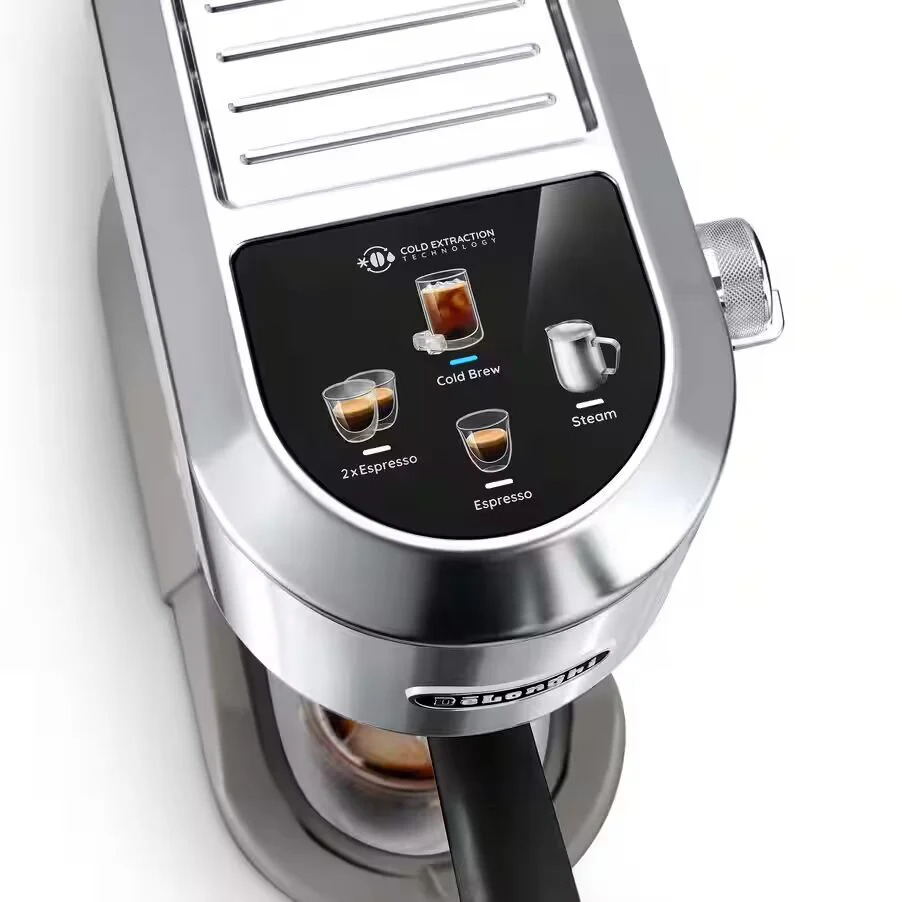
The Dedica Duo’s standout feature is its ability to produce cold-extracted espresso in just five minutes. Unlike iced coffee, which is hot coffee poured over ice, this technology uses low-pressure pulses of cold water. This Delonghi Dedica espresso machine review finds the result is a sweeter, mellower shot that preserves the integrity of your ice cubes.
Preparation for cold brew follows the same steps as a standard espresso, but you must empty and rinse the water tank first to ensure it is filled with fresh, cold potable water. Add ice cubes to a tall glass, place the glass under the portafilter spouts, and press the cold brew icon. The machine whirrs for about five minutes to complete the extraction.
The resulting drink is rich and complex, offering a refreshing alternative during hot summer months. While it does not replace the deep intensity of a 24-hour steeped classic cold brew, it is a functional and fast substitute for casual drinkers. It serves as a versatile tool for those who enjoy experimenting with different coffee styles.
Why Are Materials and Engineering Important for Durability?
Experts judge machine quality based on material safety and long-term sustainability, with a preference for stainless steel over brass or copper. Stainless steel is lead-free, more resistant to limescale buildup, and easier to keep clean. The De’Longhi Dedica Duo EC890 features brushed aluminium and stainless steel accents, though much of the housing is lightweight plastic to keep the cost down.
At just 4.1 kg, the machine is exceptionally portable but can be finicky to operate with one hand. You will likely need to hold the unit steady when locking the portafilter in place to prevent the machine from lifting off the bench. This lightweight construction is a trade-off for its ultra-slim 14 cm width, making it one of the most space-efficient units on the market.
The machine’s energy efficiency is another engineering highlight, meeting strict EU regulations on power consumption in standby and off modes. The efficient thermoblock heating element is a superior choice to traditional, energy-hungry boilers. This makes it a smart pick for eco-conscious consumers.
What Should You Know About User Experience and Maintenance?
Ease of use and haptic quality, or how the buttons and handles feel, account for a significant portion of an expert’s quality rating. The De’Longhi Dedica Duo EC890 replaces the physical buttons of previous models with a modern capacitive touch panel on top. While sleek and responsive, some users may miss the tactile feedback of pressing a physical button.
Routine maintenance is mandatory to ensure the longevity of your machine and the quality of your coffee. The unit features a dedicated descale indicator light that alerts you when the internal circuits need cleaning, typically every 30 days, depending on water hardness. Neglecting this process can lead to technical defects that are not covered by the manufacturer’s warranty.
Cleaning the steam wand after every use is non-negotiable to prevent milk proteins and fats from clogging the nozzle. Wipe the exterior with a damp cloth and purge the wand with a 5-10 second burst of steam. For deep cleaning, a needle is included to ensure the small hole in the tip remains clear of obstructions.
How to Program Custom Quantities for Your Perfect Cup?
While the machine is factory-set to deliver standard volumes, you can easily program it to match your preferred cup size. Standard espresso is delivered at about 35 ml, while a double shot is set to 70 ml. The cold brew function is programmed to deliver 150 ml by default.
To enter programming mode, press and hold the icon of the drink you wish to change for at least 10 seconds. The machine will beep, and the indicator light will blink to show it is ready. Once the coffee starts flowing and reaches your desired level, press the icon again to save the new volume into the machine’s memory.
You can also adjust the auto-off timer to save energy, choosing between 5 minutes, 90 minutes, or 3 hours of inactivity. While exploring the best espresso machines for home use, these customisation options provide a level of control usually reserved for more expensive equipment. If you ever make a mistake, the machine can be reset to its original default values through the settings menu.
Troubleshooting Common Extraction Issues
If no coffee is delivered, the most likely cause is an empty or improperly seated water tank. Ensure the tank is pushed down firmly to open the bottom valves. If the tank is full, the filter basket might be blocked by coffee ground too finely or tamped with excessive force.
Espresso dripping from the edges of the portafilter rather than from the spouts indicates the handle has been inserted incorrectly or is dirty. Ensure the portafilter is aligned with the “INSERT” mark and rotated firmly to the “CLOSE” position. If the problem persists, the brew unit gasket may have lost its elasticity or accumulated debris, requiring a thorough cleaning.
A shot that flows too quickly and produces light, thin crema is usually the result of using coffee that is too coarsely ground. Fix this by increasing the coffee quantity in the basket or using a finer grind for espresso machines. Always use fresh beans, as stale coffee will never produce the creamy texture desired by enthusiasts.
The Final Verdict: Is the Dedica Duo Right for You?
This Delonghi Dedica espresso machine review concludes the EC890 is an exceptional plug-and-play machine for those entering the world of portafilter coffee. It is well-suited for small kitchens, shared flats, or mobile setups like camper vans due to its tiny footprint. It lacks the “wow factor” and heavy-duty steam power of premium dual-boilers, but it punches well above its price point for core espresso quality.
If your primary goal is making quick, reliable espresso and experimenting with cold brew, the Duo is a fantastic investment. However, if you are a dedicated latte artist who needs powerful steam to create intricate designs, you may find the single-hole wand limiting. For most casual drinkers, the ease of use and modern aesthetic make it a memorable and functional addition to the countertop.
Ultimately, the De’Longhi Dedica Duo EC890 is a machine that can grow with you. By upgrading to third-party pro-grade baskets and bottomless portafilters, you can unlock better performance and support much finer grinds as your skills improve. It remains a budget-friendly classic that offers a surprising amount of technology for the modern home barista.
The Dedica Duo represents a smart evolution of a ten-year design heritage, maintaining the slim profile that made De’Longhi popular while adding features that matter to today’s drinkers. This DeLonghi Dedica espresso machine review highlights that while it has minor limitations in steam pressure and weight, it remains a solid, affordable gateway to genuine espresso. It is a practical, stylish, efficient tool for anyone ready to move beyond the limitations of pods and moka pots.
Sources:
- World Coffee Events. WCE procedure for measuring brewing temperature in espresso machines. 19 Jan. 2014. https://www.baristahustle.com/wp-content/uploads/2020/04/2014-WCE-procedure-for-measuring-brewing-temperature-in-espresso-machines-January-19.pdf ↩︎
- Santanatoglia, Agnese, et al. “A Comprehensive Comparative Study among the Newly Developed Pure Brew Method and Classical Ones for Filter Coffee Production.” LWT, vol. 175, 2023, p. 114471. ScienceDirect, https://doi.org/10.1016/j.lwt.2023.114471. ↩︎