Category: Business & Technology

  • Pax Silica in the Philippines: We’re Building a Future for Machines, and It Stinks

    When I sat down to trace the potential ramifications of Pax Silica in the Philippines, I didn’t expect to feel so damn hypocritical. I realised that my own digital footprints are part of a monster that’s swallowing the grid.

    Global data centres already consume more than 3.5 times the electricity of the entire Philippine economy. That’s not a typo. If data centres were a country, they would rank as the world’s 11th largest energy consumer. We’re looking at a future where we might be building cities for computers instead of people.

    What is the Pax Silica Initiative?

    The Pax Silica Initiative is a geopolitical move presented as technological cooperation. It is a US-led partnership that started in December 2025 to create a silicon supply chain.

    This thing spans the entire life cycle of the AI economy: critical minerals, semiconductors, data centres, and advanced manufacturing. It’s the backbone of a strategy to reduce reliance on geopolitical rivals and consolidate power among allied nations. The aim is to transition from being simple raw-material exporters to becoming a hub for the technologies of the future.

    Which Countries are in Pax Silica?

    The coalition is a “who’s who” of the US-aligned tech world, currently boasting 24 signatories. It includes the titans like the United States, Japan, South Korea, Singapore, India, the Netherlands, Germany, and Norway. Even Italy joined the party, though it was fashionably late after a public spat between Prime Minister Meloni and the Trump administration delayed their participation.

    What is the Purpose of Pax Silica?

    The core purpose is to secure the materials and the processing power needed to ensure that the AI revolution doesn’t stall because of a supply chain bottleneck. In a world where chips are the new oil, being deprived of them is an economic death sentence.
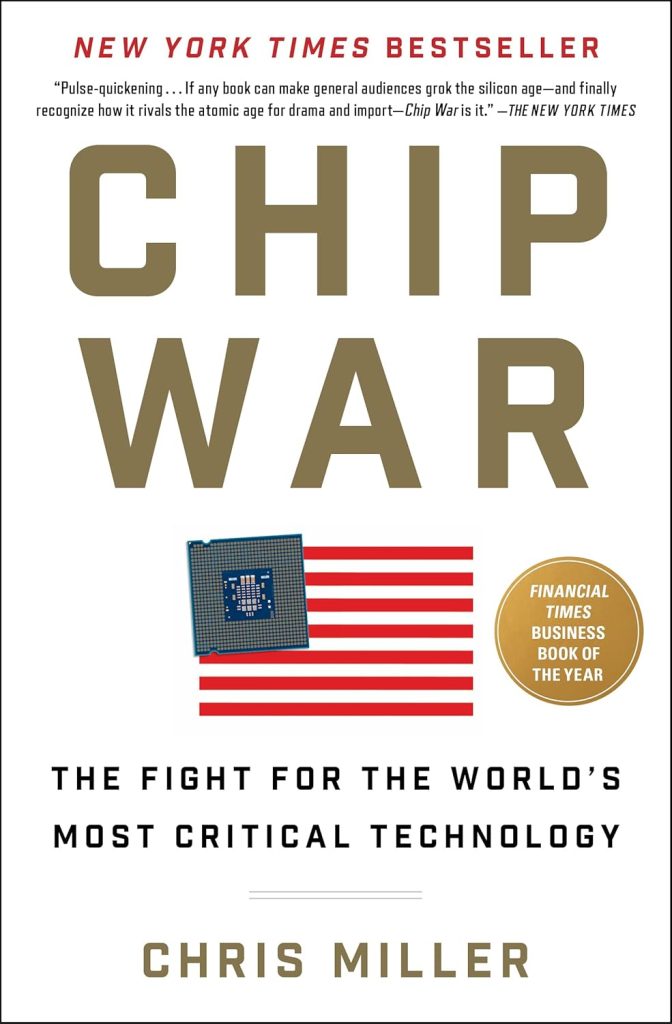
    Chip War- The Fight for the World's Most Critical Technology

    If you want to understand the reason behind America’s desperation to get Pax Silica activated, read Miller’s Chip War. He maps out how the control of EUV lithography became the ultimate power move.

    Buy on Amazon

    Pax Silica aims to foster an ecosystem that reduces dependence on single-country exporters by spreading the infrastructure across “trusted partners.” For us, it means moving up the value chain from exporting raw nickel ore to processing the advanced semiconductors that drive AI models.

    Is Pax Silica Approved in the Philippines?

    I’m afraid it’s too little, too late. But I hope I’m wrong. The Philippines signed the Pax Silica Declaration in April 2026. Construction of Pax Silica in the Philippines isn’t expected to start until 2028, but the government is working on the final framework agreement expected to be sealed later this year.

    Despite this, there’s growing dissent from environmental and science groups. They argue that we are diving headfirst into a commitment without seeing the fine print on the environmental costs.

    Who signed Pax Silica in the Philippines?

    The initiative has the full backing of President Ferdinand R. Marcos Jr. He highlighted it in his fifth State of the Nation Address as a ticket to “revitalise our economy”. Internationally, key promoters include US Under Secretary of State Jacob Helberg, who has been instrumental in pitching the project to the Philippine leadership.

    Domestically, the Bases Conversion and Development Authority (BCDA) is the primary driver. Some analysts, like economist Cielo Magno, worry that it’s being treated too much as an investment promotion story and not enough as a national development question.

    Where Will Pax Silica Be Located?

    The target is Tarlac. The government has designated a massive 1,620-hectare site in New Clark City. That’s roughly the size of 30 shopping malls. It’s a strategic location because Clark is a former US military base with existing roads and utilities. It’s located near Subic Bay, which will act as the maritime gateway for the semiconductor products.

    Pax Silica in the Philippines will be right in the middle of agricultural land that local farmers have relied on for generations.

    Interestingly, while we are fighting for land on Earth, the ambition is already scaling toward the heavens. Elon Musk and Google are reportedly discussing sending millions of satellite data centres into orbit.

    Who Leads Pax Silica?

    It’s a US-led initiative through the State Department, but in the Philippines, it’s a joint effort between the DICT and the BCDA. Energy Secretary Sharon Garin and DICT Secretary Henry Aguda have been the public faces, dismissing grid-strain concerns by pointing to planned nuclear and LNG projects. However, there is a lack of a “whole-of-society” framework.

    But as Mayor Roseller Rodriguez of Capas points out, local leaders are still asking for a comprehensive briefing on what’s actually going to happen in their backyard. The Metro Manila digital infrastructure ecosystem study warns us that these infrastructures are often “boring” to policymakers until they start “breaking” the city.

    Pros and Cons of Pax Silica in the Philippines

    Supporters often describe Pax Silica as a major step toward modernisation for the Philippines. The DICT says it could create between 180,000 and 500,000 jobs, helping the country move from business process outsourcing to high-value engineering and data science. It is also seen as a way to gain geopolitical influence and keep up in the digital world.

    But let’s talk about the risks, because they are staggering.

    • Energy Demand: The project is expected to require 3 gigawatts of electricity, which is 16% of the entire Luzon grid’s capacity. The region already experiences brownouts, and this would add a demand equal to three coal plants.
    • Water Scarcity: A data centre of this size could use 130 million litres of water each day, the same as 600,000 households. In a “Disaster Archipelago” often affected by El Niño and water shortages, this could cause serious problems.
    • Toxic Waste: Semiconductor plants create wastewater containing toxic substances that cause respiratory failure.
    • The Monopoly Trap: The chipmaking field is controlled by two giants: ASML and TSMC. We might reduce our reliance on China, but we are replacing it with dependence on US-aligned investors and technology providers. Without technology transfer, we are just providing cheap land while foreign companies keep the high-value profits.

    The Philippines is not alone in grappling with these tensions. Global precedents offer stark warnings:

    • London: Data centres compete with homes for electricity. In some areas, new homes have had to wait up to 15 years for grid connections because data centres have used up the available capacity.
    • Ireland: Data centres already devour 23% of the country’s electricity. This cost households about €715 million in inflated electricity bills between 2015 and 2023.
    • Amsterdam: Authorities announced a five-year moratorium on new data centre construction in 2025. This pause is a bold move to put people’s needs above the demands of digital infrastructure.
    • United States: To avoid grid problems, some developers have set up temporary power plants using gas turbines. These have led to legal disputes over air pollution in states such as Georgia and Tennessee. Gregg Abbott, the Republican governor of Texas, previously promoted his state as the global epicentre for data centre development. However, he has since joined other leaders in advocating for a hiatus on further construction within rural parts of the state.

    Is Pax Silica Good for the Philippines?

    The result depends on who benefits and who takes on the risks. If we hand over our land and power but outsiders keep the profits, we’re trading our future for someone else’s gain.

    We must be skeptical of the “high investment score” our government and the US used to sell us Pax Silica. To understand why, we need to understand the Value Capture trap. It’s the same trap that students fall for when they care more about their GPA than actually learning. For this, I recommend reading C. Thi Nguyen’s The Score.

    Buy on Amazon

    The Score- How to Stop Playing Somebody Else's Game

    The effect of Pax Silica in the Philippines can be good. But, among other safety measures, we need transparent governance, real-time monitoring of groundwater, and a ruling requiring at least 60% of the energy to come from renewables by 2035.

    Without strict safeguards, it’s just another case of techno-solutionism: applying high-tech bandages to crises without addressing root causes like resource depletion.

    This project could drain the Tarlac aquifers, causing the ground to sink and taking away irrigation from rice and vegetable farmers. We should not be overly optimistic. It is important to make sure this project benefits people, not just the internet lords.

  • Why I Stopped Answering Unknown Calls — And You Should Too

    I’ve learned that an AI impersonation scam can easily trick you into giving away personal details. Here’s how they do it.

    The screen showed familiar faces — her colleagues, bosses, and the usual crowd from the multinational firm where she worked. When they told her to transmit funds to a list of accounts, she didn’t hesitate.

    In a matter of minutes, the transfers amounting to HK$200 million were done. That was when the truth slapped her: the entire meeting had been a lie, a deepfake built from the fragments of her superiors’ voices and faces.

    This wasn’t a scene from a movie, nor some cautionary tale to be told over drinks. This was a real, cold, and scary crime that happened in Hong Kong in January 2024.

    I stopped answering unknown calls and you should, too. Here’s why.

    Scammers Have Gotten Better at Lying

    Phone scams used to be crude and recognizable. A prince from a distant land promised wealth if you wired a few hundred dollars. A robotic voice from the IRS threatened jail unless you called back. We laughed at them like we once laughed at deepfakes before they got better.

    Today, the scam is cleverer than ever. An AI impersonation scam uses just a few minutes of recorded speech to copy your voice or a family member, allowing scammers to impersonate you. A sobbing daughter asking for help. A panicked friend stranded without money. They are not strangers anymore; they are someone you love, or at least, someone you think you love. And seconds before logic catches up, you let the panic win.

    Unknown Calls Are Rarely Urgent

    The voice on the other end is calm. It knows your name and account number. It tells you there’s been a breach and it must be fixed. Now. They ask for your PIN and your birthday — just to be sure, they say, to protect your money. If you don’t, the voice warns, your funds will be frozen and you will lose access to your account.

    Fifty billion times last year, Americans picked up the phone to hear the same lie, sharpened with every call. Then the line goes dead, they check their balance and find nothing left.

    If you watched Jason Statham’s The Beekeeper, you’ll understand.

    My Private Data Is Worth Its Weight in Gold

    Scammers have access to technology that can imitate voices perfectly. Last year, nearly a third of Americans succumbed to an AI impersonation scam. A few seconds of their voice was cloned and used to steal money, make threats, or exploit. What’s even scarier is that half of them didn’t even know this kind of fraud existed. And 8% admitted they’d give away money if the call came from someone they loved, even if something felt off.

    In one stark case, criminals used AI to steal the voice of a CEO, taking $243,000 from the company’s account.

    It’s My Way of Setting Boundaries

    By not answering unknown calls, you draw a line. You say no to being played, no to being invaded, no to the pressure to always be on call, and no to the scam that feeds on haste and fear. In doing so, you protect yourself and those who rely on your good sense.

    I stopped answering unknown calls because I wouldn’t let my voice be used in an AI impersonation scam.

    You should stop answering, too, not because of fear, but because the world has changed. And in the face of deception, sometimes silence is the loudest act of self-defence.

  • Why the Future Needs More Women in Cybersecurity Now

    Women in cybersecurity are the outliers, and that’s a problem. Here are five reasons we need more women in this field.

    A new Netflix scam is making the rounds, and it’s convincing enough that even the cautious might fall for it. It starts with a simple email, an innocuous survey, and a promise of a reward. The branding looks right. The wording is just bland enough to be believable. And the next thing you know, someone’s walking off with your credit card details.

    The security world calls it phishing. Most people just call it getting scammed. And it happens every day, partly because criminals have gotten better thanks to AI. But mostly because cybersecurity is still stuck playing defense. It’s a field built on knowing what to look for, but somehow, it keeps overlooking the same thing: itself.

    The teams tracking these threats tend to look alike, think alike, and miss the same blind spots. More women in cybersecurity won’t fix everything, but it will fix something.

    1. Because the Future is Probably a Phishing Email

    Cybersecurity threats are getting smarter. Malware hides in resume attachments. Scammers deepfake CEOs. And yet, the people fighting these threats are still mostly men.

    Women in cybersecurity are the outliers, and that’s a problem. It’s not about filling quotas or making hiring panels look progressive. It’s about survival. A security system built by one type of person will have the same type of blind spots. Cybercriminals don’t care about gender. They care about weak points. If the industry keeps pretending half the population doesn’t belong here, the real vulnerability isn’t the code. It’s the people writing it.

    2. Because the Industry is Still a Boys’ Club

    Only about 25% of the cybersecurity workforce is female. That’s an improvement from past years when the percentage was closer to a statistical error. But it’s still a room overwhelmingly filled with men who, at some point, will joke about how their wives can’t figure out Wi-Fi. The assumption is always the same: women don’t do technical. Women do marketing. Women do HR. Women send emails reminding the real cybersecurity experts about their mandatory phishing awareness training.

    This is nonsense, of course. Women have been hacking things since hacking was a thing. Take Katie Moussouris, who helped shape the concept of bug bounty programs. Or Parisa Tabriz, Google’s self-proclaimed “Security Princess.” These aren’t outliers. They’re just the few who made it through a system that still treats them as anomalies. The industry doesn’t need more women for diversity reports. It needs them because a security field built entirely by one demographic has never worked out well for anyone.

    3. Because the Hacker Bro Aesthetic is Getting Old

    Women in cybersecurity exist, of course, but they’re rarely in the picture. The entertainment industry has spent decades building this mythology — brilliant but socially inept men protecting the digital world with sheer brainpower and an ungodly amount of caffeine. It’s a neat story, except it isn’t true. Cybersecurity isn’t just about typing furiously into a command line; it’s about human behavior, crisis response, and risk analysis. And yet, women are still asked if they’re “a fit.”

    Other fields have done this before. Law, medicine, aviation. The same skepticism, the same excuses. Too emotional. Too soft. Not wired for the pressure. And yet, no one asks if men are “a fit” for nursing. Somehow, the ability to insert a catheter isn’t questioned, but securing critical infrastructure is. It’s almost like the issue was never skill to begin with.

    4. Because the Field Pretends Biology Doesn’t Exist

    There’s an article about menopause making the rounds, and it reads like a public service announcement for half the population and a horror story for the rest. Hot flashes, brain fog, anxiety — things that will, at some point, hit most women in cybersecurity. Most workplaces act like none of this is happening. The same way they act like pregnancy isn’t a nine-month reality, or that women aren’t routinely calculating the safest route to the parking lot after a late shift.

    Cybersecurity loves to say that the human element in cybersecurity is the biggest vulnerability. Yet the field — so obsessed with risk assessments and threat mitigation — somehow fails to consider its own blind spots. Women make up 42% of the global workforce and 31.7% of senior leaders, yet they’re still scarce in cybersecurity’s upper ranks. Half the workforce starts at entry level, but by the time they get to the C-suite, only 25% remain. Maybe it’s the glass ceiling. Maybe it’s the chronic lack of bathroom stalls at tech conferences.

    The industry treats women’s needs as an afterthought — until someone files a complaint. But if the goal is stronger security, wouldn’t it help to have people who actually understand half the world’s population?

    5. Because Cybersecurity is More Than Just Coding

    The problem with cybersecurity is that it’s obsessed with code. Not security, not risk, not the small, inconvenient fact that most data breaches don’t happen because someone forgot to update a firewall, but because someone — usually a very human, very fallible someone — clicked the wrong link. Yet hiring managers continue to act like the only qualification that matters is whether you can reverse-engineer malware in your sleep.

    Which is why women in cybersecurity remain a statistical anomaly. Not because they can’t code, but because the industry keeps pretending that coding is the only thing that matters. The real threats are psychological. Social engineering scams don’t rely on bad code; they rely on people being predictable. Who better to understand that than women, who have spent their entire lives performing risk assessments? Walking alone at night? Risk assessment. Rejecting a man’s advances without bruising his ego? Crisis management. Navigating online spaces where harassment is one password reset away? Human behavior analysis.

    A firewall won’t suddenly work better if a man installs it. A phishing scam won’t feel less convincing if a woman spots the trick. The industry is too busy patching software vulnerabilities to notice its own.

    Parting Thoughts

    So, if you hire people, consider hiring more women. If you mentor, pull someone up who wasn’t handed the shortcut. If you’re in the room where decisions happen, ask why it still looks the same as it did ten years ago.

  • The Important Role Of Content Writers In Cybersecurity Compliance

    A cybersecurity content writer translates technical jargon into compelling narratives. How does that help your ISO 27001 compliance efforts?

    What’s the cost of a poorly written cybersecurity policy? A few missed semicolons, a misplaced definition, and suddenly, half the company believes that “phishing” is just an HR-approved Friday activity. Cybersecurity compliance isn’t just about firewalls and encryption — it’s about understanding the rules before the alarms start blaring.

    By 2029, the estimated cost of cybercrime is projected to hit 15.63 trillion dollars, a staggering 69% increase from today. Businesses are haemorrhaging money to ransomware attacks, data breaches, and social engineering scams, often because their employees don’t know the difference between a real email and a cleverly disguised phishing attempt. The problem isn’t just technology — it’s communication. Companies invest in security systems, but if no one knows how to use them properly, they might as well be expensive paperweights.

    The biggest hurdles in implementing ISO 27001 are limited awareness and resistance to change. People don’t like new rules, especially when they involve multi-factor authentication. Cybersecurity content writers translate dry, jargon-heavy compliance policies into something people might read (and follow). Businesses prioritise clear, engaging security content comply with regulations and create a culture where cybersecurity is a habit and not a burden.

    What is Cybersecurity Compliance and Why Does It Matter?

    Cybersecurity compliance means dodging fines and keeping auditors from hyperventilating. It is also the thin line between business as usual and front-page disaster. Regulations like GDPR, CCPA, and ISO 27001 aren’t bureaucratic busywork; they exist because data leaks don’t just spill — they flood.

    A cyberattack in industries like oil and gas doesn’t just shut down servers; it shuts down pipelines. And when pipelines go dark, it’s a national security crisis that sends government officials into war rooms and markets into freefall. Compliance frameworks are rulebooks and survival manuals rolled into one.

    Skip compliance, and reality slaps back — ransomware freezes operations, regulators tally fines, and your brand’s credibility circles the drain. As one study on Egypt’s oil and gas sector highlights, a lack of awareness, trained personnel, and investment in cybersecurity makes businesses vulnerable.

    Somewhere right now, a company’s database is being breached. Maybe it’s a small logistics firm with a password policy weaker than a teenager’s curfew. Perhaps it’s a multinational oil and gas corporation where a single phishing email could shut down operations. The result is the same: stolen data, financial losses, and a round of public relations gymnastics to assure customers that, no, they won’t be the next victims.

    How Can Content Writers Help with Cybersecurity Compliance?

    What’s the best way to make an employee ignore a security policy? Bury it in a 50-page manual written in legalese, slap on a few “DO NOT” statements, and hope for the best. The reality is that people don’t absorb what they don’t understand, and cybersecurity is often presented like an arcane language — dense, dull, and best left to IT.

    The problem isn’t solved by simply distributing a policy paper — compliance happens when people understand and follow the policies. Employees are the first line of defence against breaches. But if they can’t recognise a phishing attempt or think “ISO 27001” sounds like a robot’s serial number, then your risk management strategy has already failed.

    How Cybersecurity Content Writers Make a Difference

    • They make security training feel less like detention. Nobody retains information from a three-hour lecture on password hygiene. A well-crafted interactive guide or micro-learning quiz? That sticks.
    • They translate “IT-speak” into actual human language. “Your credentials have been compromised due to unauthorised access by a malicious actor.” Or: “Someone stole your password. Change it now.” Guess which one gets a faster response?
    • They tell cautionary tales that don’t bore people to death. A short story about a careless click leading to a million-dollar breach is far more effective than another dry PowerPoint on “best practices.”
    • They make ISO 27001 sound less like a death sentence. A good writer explains why security controls matter, not just that they exist.

    The goal is to educate and make cybersecurity second nature. And that happens when complex frameworks like ISO 27001 are distilled into something that doesn’t make people’s eyes glaze over.

    A cybersecurity content writer translates technical jargon into compelling narratives. Done right, content prevents breaches, secures buy-in, and makes security a business advantage. Because if no one understands your policies, do they even exist? Invest in clarity. Hire a writer before your next breach writes the headlines for you.